Guest Episode
Ep. 214 · Apr 26, 2026
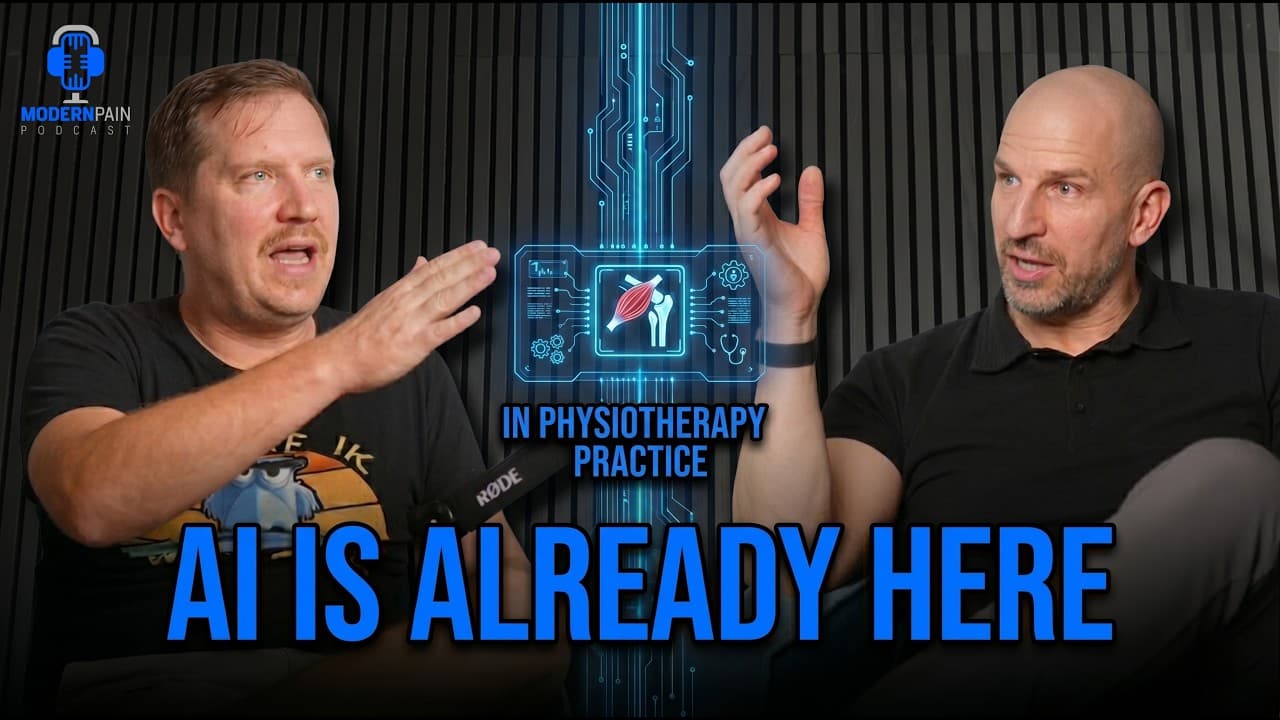
AI Is Already Running MSK Services. Are PTs Ready?
ACT & Behavior Change
Part 2 goes from definitions to implications. Bottom-up pain does not mean “it’s in the tissues.” This episode is a recording of a live interview with pain researcher and clinician Asaf Weissman. If you haven’t watched Part 1, start there—we laid the foundation: why pain semantics matter, how mixed messages harm patients, and why “nothing is wrong with your body” is an overreach. In Part 2, we dig into: What “always bottom up” actually means (and what it doesn’t)Structural paradigm vs pathoph...
Part 2 goes from definitions to implications.
Bottom-up pain does not mean “it’s in the tissues.”
This episode is arecording of a live interview with pain researcher and clinician Asaf Weissman. If you haven’t watched Part 1, start there—we laid the foundation: why pain semantics matter, how mixed messages harm patients, and why “nothing is wrong with your body” is an overreach.
In Part 2, we dig into:
This is the second half of a two-part series. Part 1 builds the framework. Part 2 challenges how we interpret evidence, scope, and clinical uncertainty—while staying anchored to what helps the patient in front of you.
Subscribe & Follow
Never miss an episode — listen wherever you get your podcasts.

Mr.
Asaf (Klaf) Weisman is a physiotherapist with two decades of clinical experience in orthopedic/musculoskeletal rehabilitation. He is a Ph.D. student and the lab manager of the Spinal Research Laboratory at Tel-Aviv University’s “Sackler School of Medicine” in Israel, where his studies revolve around
Join the Conversation
Ep. 214 · Apr 26, 2026
Ep. 213 · Apr 19, 2026
Ep. 212 · Apr 5, 2026
Ep. 211 · Mar 8, 2026